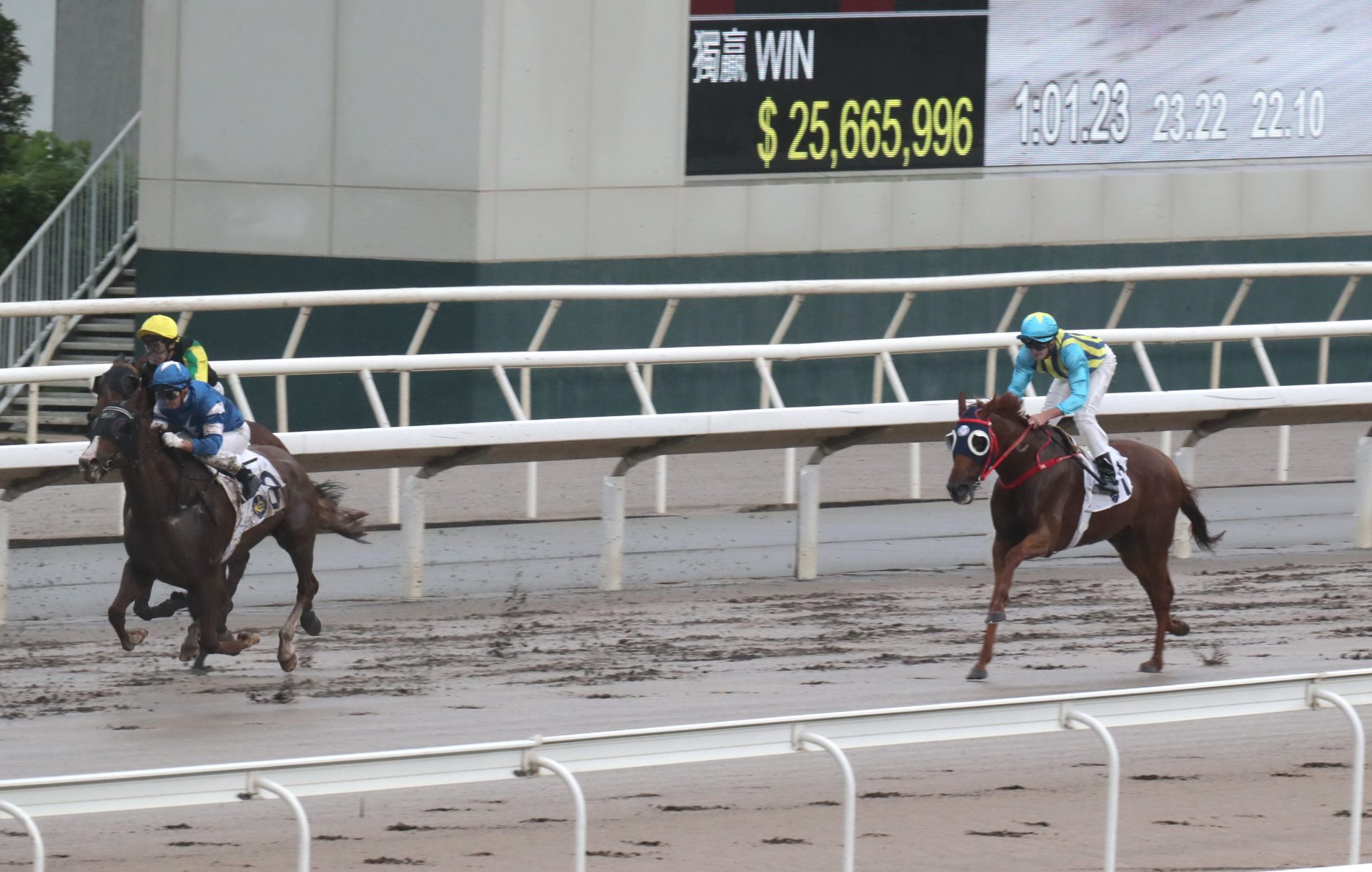
Whenever an All Weather Track race is scheduled in Hong Kong, the Hong Kong Jockey Club publishes the official track going before racing. The Club also provides Clegg Hammer readings as a reference, with a higher reading generally indicating a firmer surface under normal weather conditions.
However, compared with turf penetrometer readings, All Weather Track figures may not always provide racegoers with an immediate indication of how the surface is likely to perform. Many racing fans therefore continue to study the early races closely, looking for possible patterns such as whether the track is favouring leaders or closers, or whether horses racing along particular sections of the course appear to hold an advantage.
The condition of the All Weather Track is not fixed throughout the day. It can be affected by the weather, the amount of morning trackwork, moisture levels and routine maintenance. During a race meeting, the track maintenance team may also carry out work when necessary to maintain a safe and suitable racing surface for both horses and riders.
In addition to major maintenance operations, such as ripping the track or adding new surface material, harrowing forms part of the regular management of the All Weather Track. The HKJC’s published trackwork arrangements have long included scheduled harrowing breaks, while the Club also issues notices when more extensive ripping work is carried out.
Hundreds of horses may use the training tracks during morning trackwork. Repeated use naturally affects the surface, making regular inspection and maintenance essential. Harrowing helps restore the surface after use and forms an important part of providing a consistent and suitable track for horses in training.
Watering is another recognised element of All Weather Track management. The HKJC’s official going codes have previously included “NW”, meaning “normal watering”, while historical race results also recorded meetings at which the going was officially described in this way. Although that code is no longer commonly used in current form records, it demonstrates that watering has long formed part of All Weather Track preparation in Hong Kong.
Both harrowing and watering therefore require careful judgement from experienced track personnel. Conditions can differ according to rainfall, temperature, usage and the state of the surface, meaning that maintenance cannot necessarily follow an identical formula on every raceday.
For racing fans, changes to the All Weather Track are also worth considering when analysing a meeting. Some horses perform particularly well on a faster surface, while others may be better suited by different going conditions. The HKJC itself advises racegoers to take account of a horse’s preference for different tracks and going conditions when assessing its previous performances.
Even when two races are staged over the same distance and carry similar official going descriptions, the precise surface conditions may not be completely identical. Weather, track usage and maintenance work can all form part of the wider picture.
Providing additional information about All Weather Track maintenance could therefore give racing fans a more complete understanding of how the surface has been prepared. For example, where appropriate, a brief indication of whether watering has taken place before or during a meeting could serve as another useful reference for owners, trainers, jockeys and the betting public.
Such information would be particularly relevant to customers placing multiple-race bets, including the Six Up. Knowing more about the timing of track maintenance would not identify the winner of a race, but it could help racegoers place previous performances into better context when comparing different runners.
Naturally, no race should be assessed through a single piece of information. A horse’s ability on the All Weather Track, the anticipated pace, barrier draw, weight, fitness and race position can all influence the result. Knowing when watering occurred would not automatically establish which horses were likely to benefit, but it could provide an additional piece of information when studying form.
Race analysis has never been about relying on one number alone. The official going, Clegg Hammer readings, weather conditions, early-race patterns and track maintenance arrangements may all contribute to a fuller understanding of the surface.
The HKJC’s track maintenance team performs an important role in maintaining a safe and consistent racing environment. Building upon the information already available by offering further explanation of All Weather Track preparation could help racegoers better understand both the changing nature of the surface and the expertise involved in managing it.