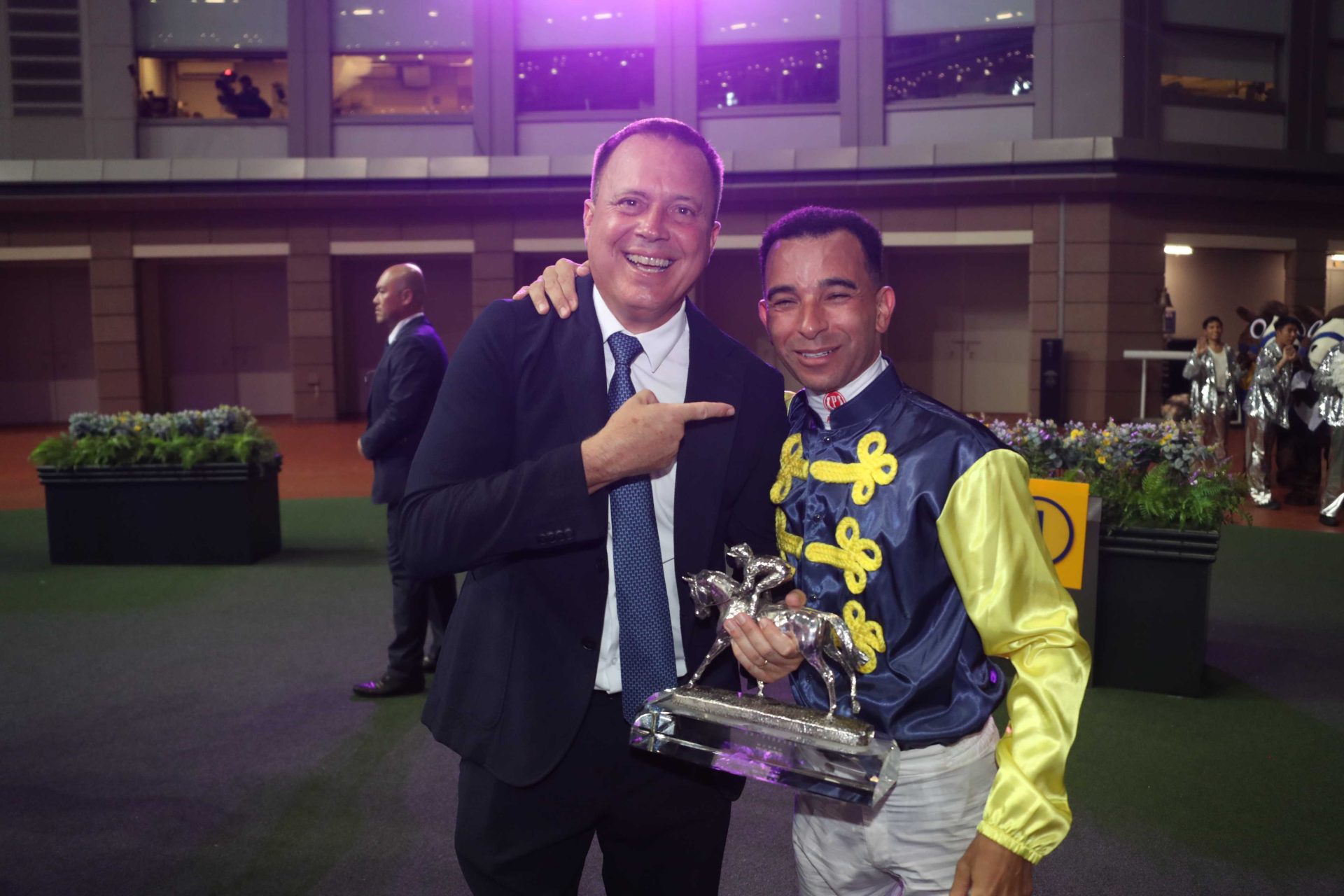
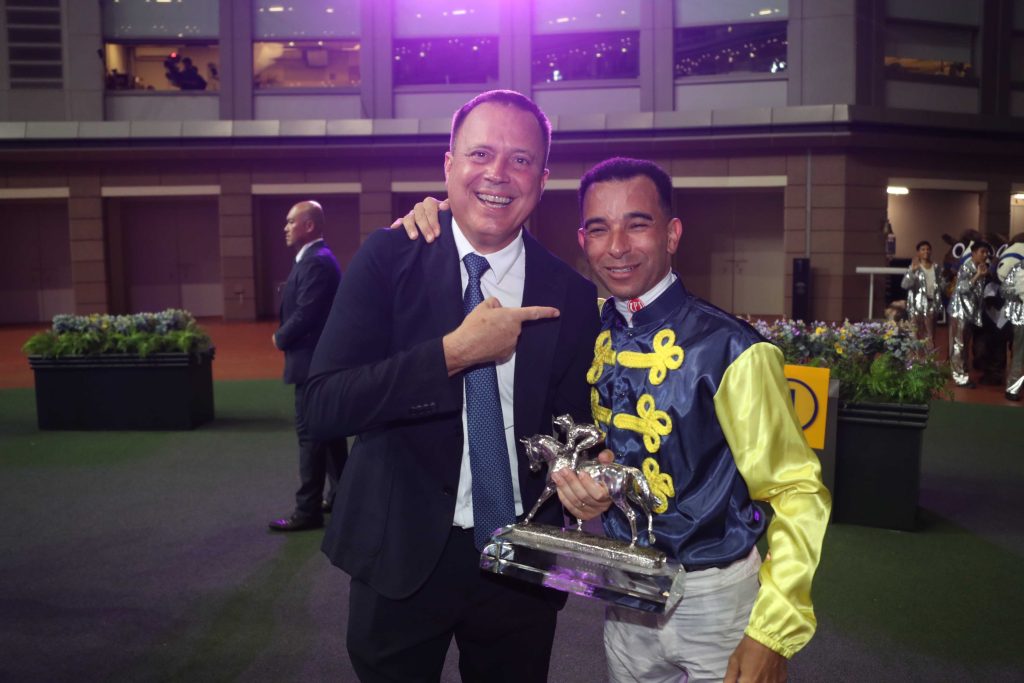
The 2025/26 Hong Kong racing season ended with Caspar Fownes securing his fifth trainers’ championship after saddling 69 winners.
The title race had initially been wide open. Danny Shum, Mark Newnham and David Hayes were all among those who appeared capable of challenging for the crown. However, as the season entered its closing stages, Fownes suddenly found another gear and quickly took control of the championship.
The turning point was not the unexpected improvement of one particular horse. Instead, it was the return of a familiar Brazilian jockey.
Fownes had applied in February to retain Joao Moreira as his stable jockey from 7 April until the end of the season. Moreira immediately made an impact, combining with Fownes for four winners at Happy Valley shortly after returning to Hong Kong.
The partnership continued to gather momentum. In just over three months, Moreira rode 27 winners for the stable, accounting for almost 40 per cent of Fownes’ 69 victories. Their successful partnership helped Fownes secure the championship with one meeting still remaining.
The influence of a world-class jockey on the fortunes of a stable prompted many long-time racing fans to remember an era when retained jockeys were a much more prominent feature of Hong Kong racing.
During the 1980s, 1990s and the early years of the new century, many of Hong Kong’s leading stables had a recognised first-choice jockey. The trainer selected and prepared the horses, planned their campaigns and arranged their trackwork, while the stable jockey regularly took part in morning exercise, barrier trials and races.
The jockey did not simply meet the horse for the first time on race day. Instead, he developed an understanding of the horse’s temperament, movement and preferred racing style through regular contact.
Brian Kan worked successfully with several leading jockeys during his training career. Ivan Allan, David Hayes, Peter Ho and John Moore were also among the trainers who understood the importance of having strong and relatively stable riding arrangements.
Most major stables had their own core group of jockeys. When racing fans looked at the declarations, they could often identify the stable’s intentions simply by studying the riding bookings.
One of the most memorable trainer-jockey-horse combinations was Tony Cruz, Felix Coetzee and Silent Witness.
The champion sprinter began his career with 17 consecutive victories, with Coetzee partnering him throughout his remarkable rise. The jockey understood the horse’s speed, temperament and ideal moment to accelerate. That level of understanding between horse, jockey and trainer could not easily be reproduced simply by booking another top rider on race day.
John Moore also worked with a succession of internationally renowned jockeys, including a lengthy and highly successful partnership with Darren Beadman.
Moore won the Hong Kong Derby six times during his training career, with champions including Viva Pataca, Collection, Designs On Rome, Werther and Rapper Dragon. The consistent support of leading jockeys was an important part of his outstanding record in Hong Kong’s biggest races.
Douglas Whyte was another central figure during this period. The South African won 13 consecutive Hong Kong jockeys’ championships and recorded 1,813 victories in the city.
At that time, leading jockeys often developed long-term relationships with several important stables. The jockey understood what the trainer expected, while the trainer knew the jockey’s strengths. Stable plans were clearer, and responsibility was more easily defined.
Hong Kong racing has since changed. Most riders are now licensed as Club jockeys or freelance jockeys, allowing them to accept rides from different trainers.
During the 2025/26 season, the Hong Kong Jockey Club issued full-season Club jockey licences to riders including Zac Purton, Hugh Bowman, Karis Teetan, Alexis Badel and Andrea Atzeni, while several locally trained riders continued as freelance jockeys.
The modern system gives jockeys access to a wider range of opportunities. It also allows trainers to select riders according to a horse’s weight, barrier position, racing characteristics and availability.
However, problems can arise when there are not enough established top-class jockeys. The strongest horses are often concentrated among a small number of riders, while other jockeys struggle to build lasting relationships with particular stables.
A jockey may ride a horse in one race but be replaced at its next start. He may not have taken part in its trackwork or trials, while the trainer may have to begin searching for a new rider after every declaration day.
The system appears flexible, but it can sometimes create constant changes and a lack of continuity.
The 2025/26 jockeys’ championship again demonstrated the considerable gap between the leading riders and the rest. Zac Purton claimed his ninth Hong Kong championship and passed the milestone of 2,000 Hong Kong winners during the season.
When an elite jockey is free to choose the best rides from several different stables, other riders have fewer opportunities to establish regular support. Smaller and mid-ranking stables may also find it difficult to secure a suitable jockey for their better horses.
The success of Fownes and Moreira demonstrated that the retained-jockey model has not necessarily become outdated.
Moreira’s contribution was not limited to riding heavily backed favourites. Through barrier trials, trackwork and races, he could provide the stable with regular feedback. He understood which horses were worth waiting for, while Fownes could plan campaigns with the opinion of a trusted first-choice rider.
The entire team was able to move in the same direction.
A complete return to the old system may not be practical. If every stable employed its own retained jockey, the best riders could become concentrated in a small number of powerful yards. Local jockeys and smaller stables might receive even fewer opportunities.
A more realistic approach would be to maintain the existing Club jockey system while allowing more qualified stables to employ short-term or full-season retained riders. The two models could operate alongside each other.
The real value of a stable jockey is not simply that he receives priority on the best horses. It is the responsibility, trust and understanding created through a long-term partnership.
When the stable wins, the team shares the success. When something goes wrong, there is a familiar person who can explain what happened. Racing fans are not required to study constantly changing trainer-jockey statistics to guess whether a particular booking carries special significance.
Fownes recruited Moreira at the most competitive stage of the season and transformed a close championship battle into a title secured before the final meeting.
Their success offered Hong Kong racing a timely reminder. The overall quality and depth of the jockey roster remain important, but lasting partnerships between riders and trainers may be equally valuable.
Hong Kong racing once flourished not only because it attracted many great jockeys, but also because its leading stables had recognisable teams and distinct identities.
There may be no single answer to whether Hong Kong needs more stable retained jockeys. However, the 2025/26 season provided one of the strongest arguments in favour of the system for many years.