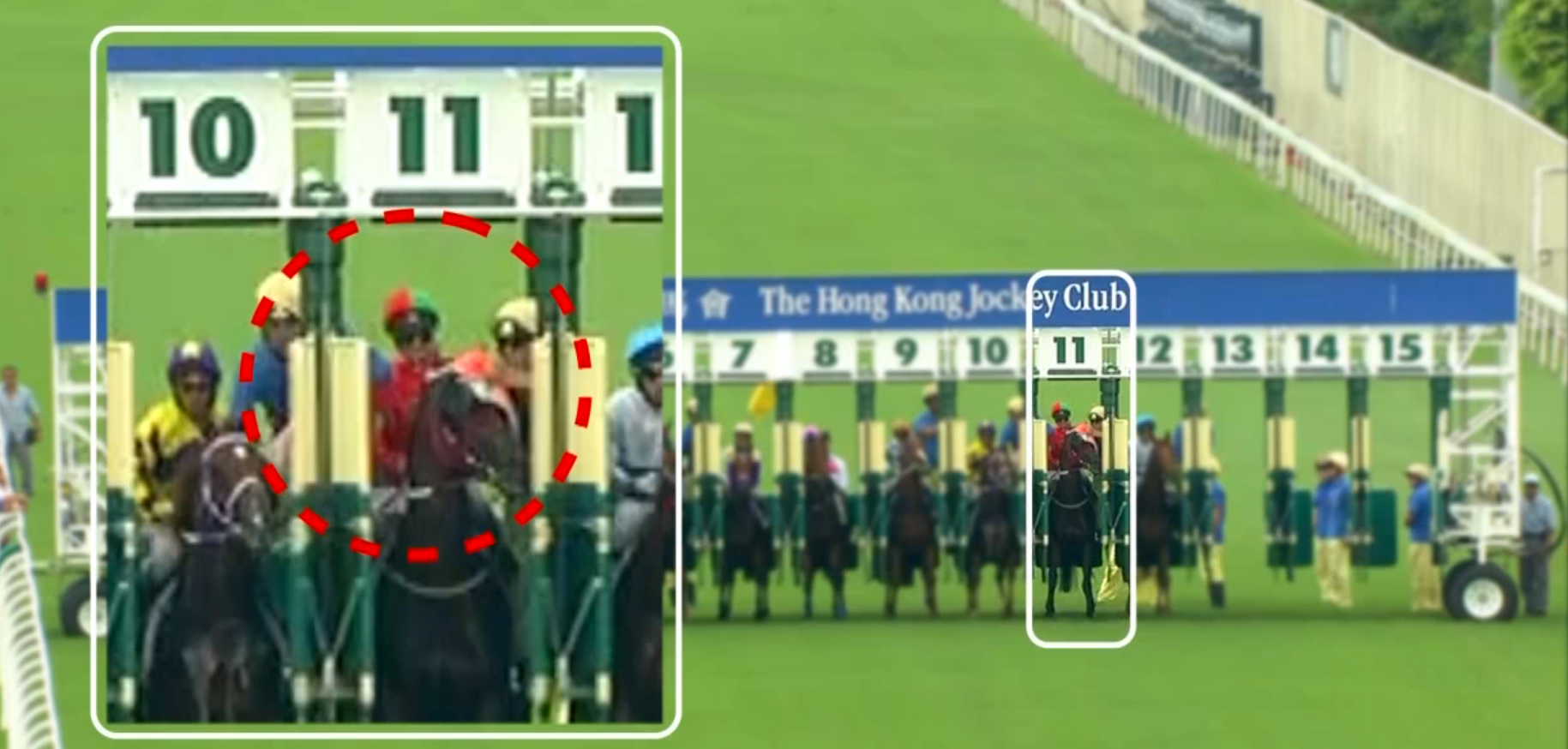
A horse may leave the starting stalls and even complete the entire race, only to be declared a non-starter afterwards. Although such a decision may appear unusual, it is not based simply on how slowly the horse began. The Racing Stewards must determine whether the horse was afforded a fair start and whether an incident at the start materially prejudiced its chance of competing successfully.
According to information provided by The Hong Kong Jockey Club, the principal consideration is whether the horse was given a fair opportunity to start with the rest of the field. If the Racing Stewards conclude that the horse was affected by unfair circumstances at the start and that the incident substantially prejudiced its chances in the race, they may declare it a non-starter.
However, a horse will not automatically be declared a non-starter merely because it began slowly, jumped awkwardly or lost ground as a result of its own behaviour inside the stalls. In such circumstances, the horse may still be considered to have been afforded a fair start.
When a starting incident requires investigation, the declaration of weighed-in may be delayed while the Stewards review the available footage. They may examine the incident from the head-on, side-on and other patrol-camera angles, as well as take evidence from the jockey, trainer, starter and starting-stall handlers.
One of the most important questions is whether the incident was caused by an external factor or by the horse’s own actions. For example, a horse may rear, lower its head, turn sideways or otherwise behave awkwardly at the moment the gates open. Even if it loses considerable ground, the Stewards may still rule that it was properly started because the disadvantage arose from its own behaviour.
On 7 December 2025, Dragon Star turned its head inwards while being assisted by a starting-stall handler and lost ground when the gates opened. After reviewing the incident, the Stewards ruled that the horse had been afforded a fair start and declared it a runner. The horse was subsequently required to perform satisfactorily in a barrier trial before being permitted to race again.
The position may be different when a mechanical, equipment-related or other external problem prevents a horse from beginning normally. In those cases, the Stewards must decide whether the incident seriously affected the horse’s ability to leave the stalls and take part competitively.
At the same race meeting, the hood and bridle worn by Crimson Wind became displaced before the start, restricting the jockey’s ability to control the horse during the race. The Stewards concluded that the equipment problem had prejudiced the horse’s ability to start and materially affected its chances. It was therefore declared a non-starter.
The Rules of Racing also allow the Stewards to take action when a horse gains an unfair advantage at the start. Depending on the circumstances, the horse may be declared a non-starter or disqualified. If a horse starts from the wrong stall, the Stewards may confirm the placings, declare the horse a non-starter or, in more serious circumstances, declare the race void.
There are also limits on when a horse may be declared a non-starter. Under the relevant rules, a horse affected by unfair starting circumstances cannot be declared a non-starter if it finishes first, second, third or fourth.
On 9 February 2025, Golden Journey reared as the gates opened and lost ground. As the horse eventually finished third, the Stewards were unable to consider declaring it a non-starter under the applicable rule.
A non-starter should not be confused with a horse being withdrawn before a race. A declared runner is generally required to take part unless it is withdrawn for an approved reason, such as a veterinary problem supported by the necessary certification. A non-starter ruling normally concerns an incident occurring at or immediately around the start and is made by the Stewards after the race following a review of the footage and evidence.
For racing fans, a horse finishing a long way behind does not automatically mean that bets on it will be refunded. Similarly, a jockey being dislodged or a horse rearing in the stalls does not necessarily mean that it did not officially take part.
The central questions are whether the horse was afforded a fair start and whether an external incident materially prejudiced its chance in the race. This procedure protects the interests of bettors while ensuring that poor starting behaviour by the horse itself is not incorrectly treated as an unfair external event. It is an important part of maintaining fairness and consistency in the determination of race results.
Source: Hong Kong Jockey Club