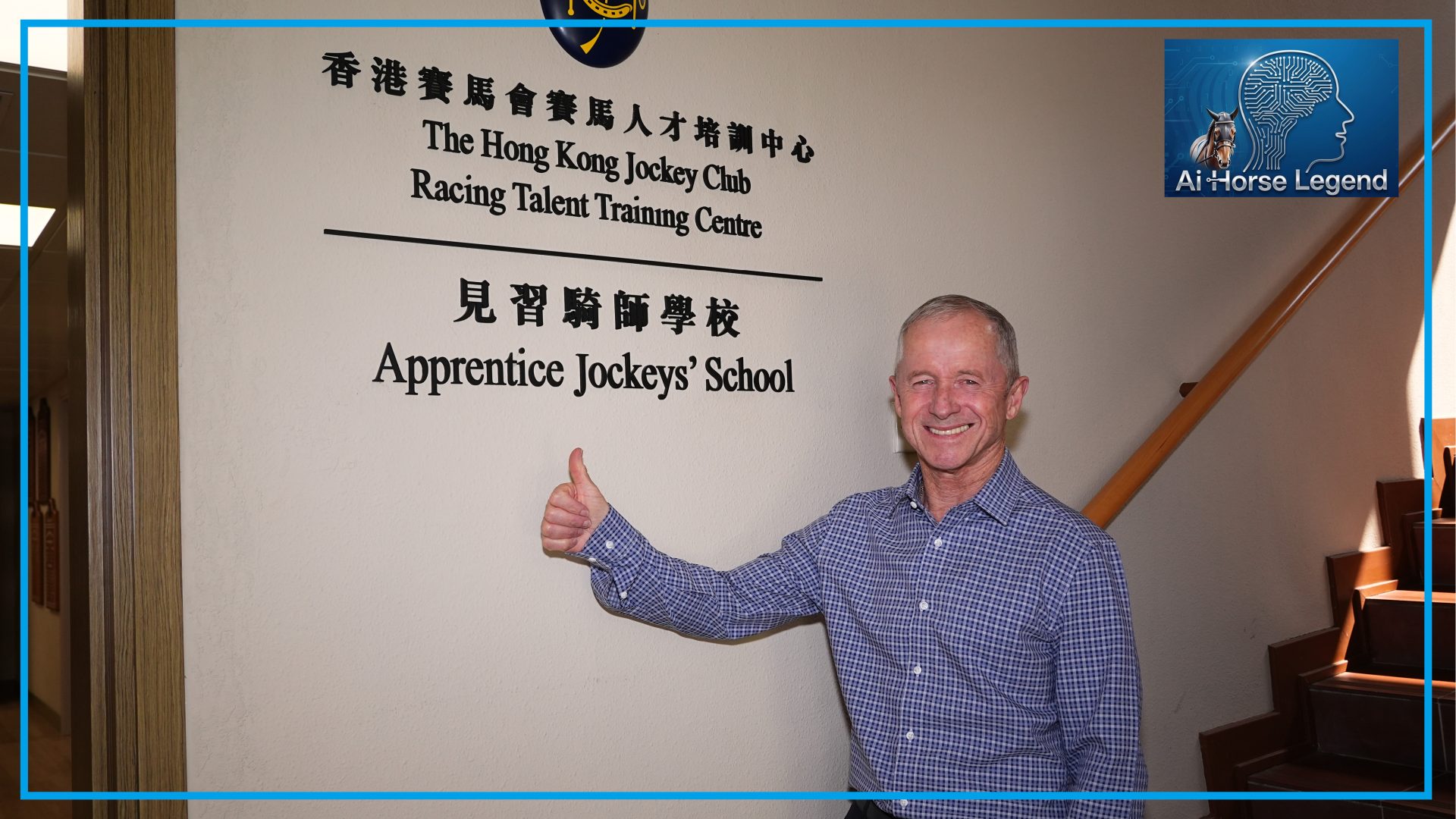
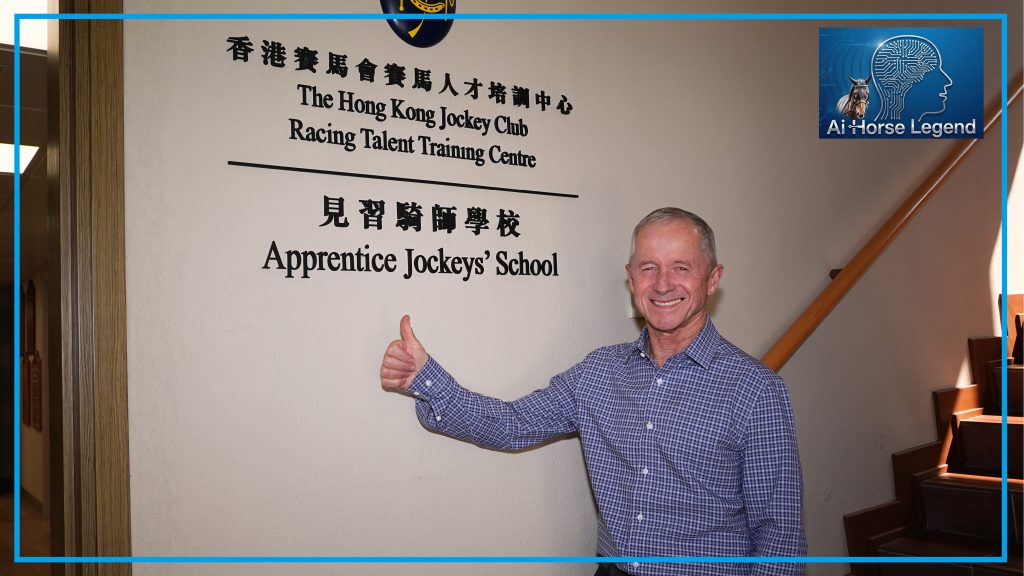
Hong Kong racing is renowned for attracting world-class jockeys. Yet alongside international stars such as Zac Purton and Hugh Bowman, a group of homegrown riders have also established themselves through local training, overseas experience and years of competition at the highest level.
Many of them began their careers at The Hong Kong Jockey Club’s Apprentice Jockeys’ School. The school does far more than teach young riders how to balance on horseback. It has become a cradle for the development of jockeys, trainers and professionals serving many different areas of the racing industry.
The Apprentice Jockeys’ School was established in 1972, with its original school building and dormitories located on Shan Kwong Road in Happy Valley. During the 1980s, the training base was relocated to Beas River in Sheung Shui.
Trainees first received basic riding instruction and learned about horse care at Beas River before being assigned to active racing stables at Sha Tin Racecourse. There, they gained practical experience by riding racehorses in trackwork under different trainers.
Members of the school’s first intake included Tony Cruz and Ricky Yiu, both of whom later became leading figures in Hong Kong racing.
As the local racing industry became increasingly professional, the scope of training continued to expand. The Racing Development Board was established in 2005 to provide more systematic vocational education for jockeys, work riders, stable-management personnel and horse-care staff.
In 2022, when the Apprentice Jockeys’ School celebrated its 50th anniversary, the organisation was renamed the Racing Talent Training Centre. It now comprises the Apprentice Jockeys’ School, which specialises in developing riding talent, and the Racing Talent School, which provides training for a wider range of racing-related careers.
Many people assume that a jockey requires little more than a light build and exceptional courage. In reality, the selection and training process is far more comprehensive.
Applicants are assessed on their eyesight, balance, hand-eye coordination, explosive power, flexibility, grip strength and cardiovascular fitness. They must then pass interviews, horse-contact assessments and a residential selection camp before they can be admitted as Racing Trainees.
Once accepted, trainees study riding skills, stable management, horse care, sports science, English, computer applications and physical and mental wellbeing. They must also undergo continuous fitness training and pass assessments in a wide range of subjects.
Life as a trainee is demanding. According to the daily schedule published by the Club, trainees may rise as early as 3:30am and begin riding practice at 4:30am. They then feed the horses, clean the stables and attend lessons in Chinese, English and racing-related certificate courses.
In the afternoon, they return to riding and stable duties while also taking part in fitness, computer and sports-science training. Lights are out at around 9pm, allowing them to prepare for another early start the following morning.
This disciplined routine develops far more than riding ability. It teaches trainees responsibility, self-discipline and the importance of placing horse care at the centre of their work.
The Club’s racing programmes have been accredited by the Hong Kong Council for Accreditation of Academic and Vocational Qualifications and cover Levels One to Four of the Hong Kong Qualifications Framework.
In riding, trainees progress from basic equestrian skills to work-rider training and eventually to advanced race-riding courses. They must also understand equine illness, stable management, racing techniques and communication with trainers and owners.
A jockey’s job is therefore not simply to drive a horse towards the winning post. A successful rider must be able to understand a horse’s condition, follow tactical instructions and make accurate decisions in a highly competitive and fast-moving environment.
Completing the initial training in Hong Kong is only the first step. Promising trainees who meet the required standards may be sent overseas to learn under established trainers.
While abroad, they take part in stable work, obtain local apprentice jockey licences and gain race-riding experience in official competition. They are also required to manage their own daily lives, improve their language skills and develop the communication and social abilities needed to work in a different racing environment.
After completing the required number of rides and gaining sufficient experience, they may return to Hong Kong and apply to the Club’s Licensing Committee for an apprentice jockey’s licence.
This model—building a foundation in Hong Kong, gaining practical experience overseas and returning home to face local competition—has produced many jockeys who have succeeded in major races.
Vincent Ho is one of the most distinguished graduates of the system. After completing his local training, he was sent to New Zealand, where he rode 44 winners. He later returned to Hong Kong and became champion apprentice jockey in the 2010/11 season.

Ho subsequently won the Tony Cruz Award for the leading homegrown jockey on four occasions and recorded a career-best 96 wins during the 2022/23 season. In 2023, he became the first Hong Kong-trained jockey to win the International Jockeys’ Championship at Happy Valley.
Ho is best known for his remarkable partnership with Golden Sixty. Together, they won the Hong Kong Derby, three editions of the LONGINES Hong Kong Mile, three editions of the Champions Mile, as well as major races including the Stewards’ Cup and Hong Kong Gold Cup.
He also partnered Japanese mare Loves Only You to victory in the QEII Cup, demonstrating that a Hong Kong-trained rider could compete successfully against the world’s leading jockeys at international Group One level.
In November 2024, Ho reached the milestone of 600 Hong Kong winners, making him one of the brightest success stories produced by the Apprentice Jockeys’ School.
Among the younger generation, Jerry Chau has also carried forward the school’s training tradition. He joined the Racing Trainee programme in 2015 before being sent to Adelaide, Australia, where he rode 77 winners prior to returning home.

Chau rode two winners at his first Hong Kong race meeting in 2020. During the 2020/21 season, he recorded 58 victories, breaking the previous record held by Matthew Chadwick for the highest number of wins by an apprentice jockey in a single Hong Kong season.
He later partnered Courier Wonder to victory in the Group Two Jockey Club Sprint, showing that a new generation of homegrown riders could also succeed at Pattern-race level.
Female jockey Britney Wong is another notable recent graduate of the Apprentice Jockeys’ School. She joined the school as a Racing Trainee in 2016 and was sent to Adelaide in 2022 for overseas training under trainer Jon O’Connor.
Wong rode 50 winners during her time in Australia and later completed a short riding stint in New Zealand.
After returning to Hong Kong, she was allocated to the David Hall stable and became the first locally trained female apprentice jockey to be licensed in Hong Kong since Kei Chiong retired in 2018.
Wong opened her Hong Kong account aboard the Douglas Whyte-trained Can’t Go Wong in September 2024. She completed her first season with 18 victories, eight of which came on the all-weather track.
During the 2025/26 season, she continued to make progress and added the Panasonic Cup to her record, while her total number of Hong Kong winners continued to rise.
Having begun at the Apprentice Jockeys’ School and developed her skills through overseas training, Wong’s progress has continued the tradition of locally trained female jockeys in Hong Kong. Her career also demonstrates that the Club’s training structure can provide young people from different backgrounds with a route into professional racing.
Female riders face considerable challenges in areas including physical demands, weight management and competition for opportunities. However, Wong’s performances have shown that, with suitable rides and continued support, female jockeys can establish themselves in the highly competitive Hong Kong racing environment.
The talent pipeline remains active. Ellis Wong completed his initial training in Hong Kong before continuing his development in South Australia, where he rode 88 winners.
After returning to Hong Kong, he made steady progress and recorded his 70th local victory in February 2026, ending his apprenticeship and becoming a fully fledged jockey.
Nichola Yuen, meanwhile, received training in Australia, New Zealand and South Africa before joining the Hong Kong riding ranks. He quickly recorded 14 victories during the 2025/26 season, reflecting the school’s continuing ability to develop young riders through a broad range of international experiences.

Their development shows that the Apprentice Jockeys’ School does not focus solely on basic riding skills in Hong Kong. By sending trainees to different racing jurisdictions, the system exposes them to different racecourses, race tempos, riding styles and stable practices, better preparing them for the challenges they will face upon returning home.
The value of the Apprentice Jockeys’ School also extends well beyond the development of active jockeys.
Some graduates have gone on to become riding instructors, stable-management professionals or trainers. Tony Cruz and Ricky Yiu were members of the school’s first intake, while champion trainer Francis Lui is another example of how the training system has contributed to the long-term development and continuity of Hong Kong racing.
Trainees who do not become professional jockeys can still pursue careers as work riders, lead-horse riders, riding instructors, stable-management personnel or in other specialised racing roles.
For the Club, the school is therefore not designed to produce people for only one position. It develops racing professionals who understand horses, are familiar with stable operations and possess the knowledge, discipline and practical ability required by the industry.
Spectators may see a jockey for only one or two minutes as a horse races towards the winning post. Behind those brief moments, however, are often years of early mornings, stable work, physical training, overseas living and experience gained through countless races.
From the original school building on Shan Kwong Road to Beas River, Sha Tin and Huangcun in Guangzhou, and onward to racecourses across Australia, New Zealand, South Africa and other parts of the world, the Apprentice Jockeys’ School has spent more than five decades building far more than a riding programme.
It has created a pathway that allows young people in Hong Kong to begin with no racing experience and gradually progress towards a professional career on the local and international stage.
The achievements of Vincent Ho, Jerry Chau, Britney Wong, Ellis Wong and Yuen Sing-yiu demonstrate that homegrown jockeys do not have to remain supporting players alongside international stars.
With a strong training foundation, overseas experience and the ability to make the most of every opportunity after returning home, they can succeed in Pattern races, international contests and at the highest levels of Hong Kong racing—and become leading figures in their own right.
Source: Hong Kong Jockey Club