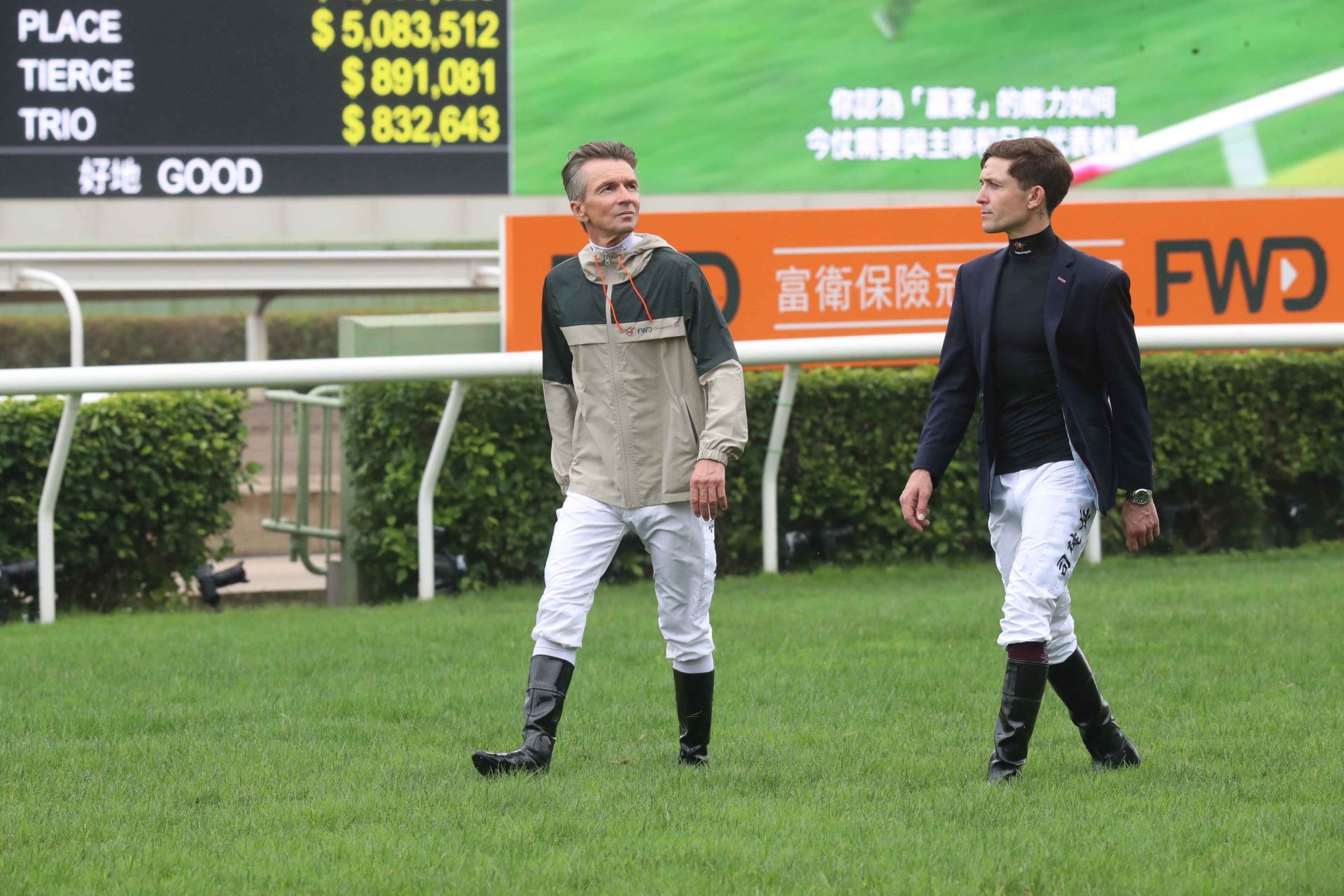
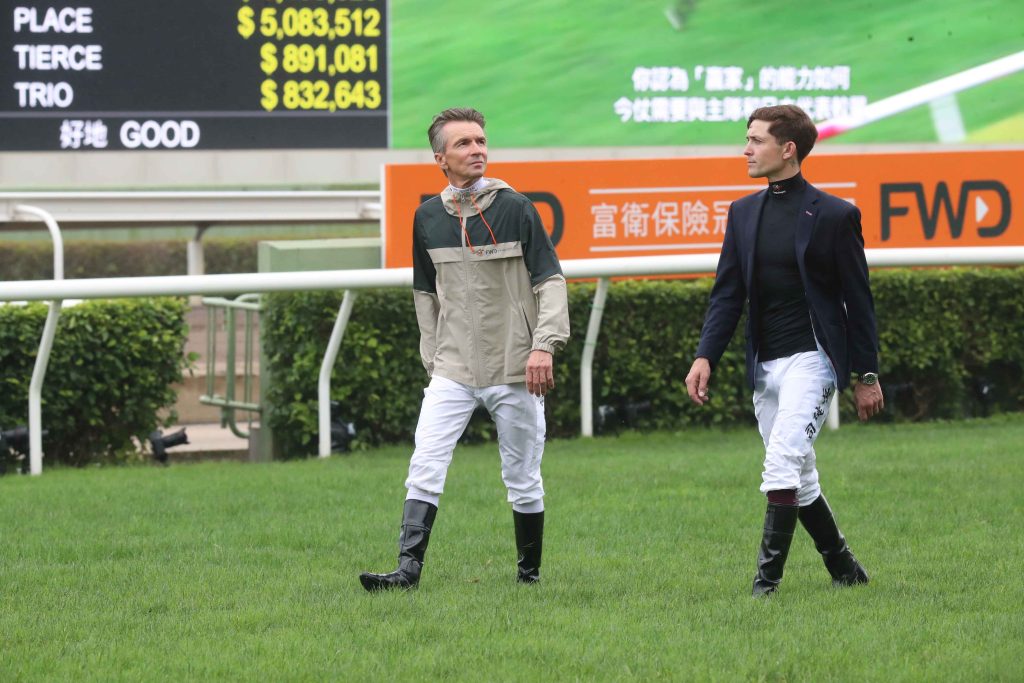
In the eyes of racing fans, a horse race is decided in the brief minute or two after the gates open. But in the jockeys’ world, the battle quietly begins hours before the start. If you arrive at the racecourse early, you might notice an interesting sight: several jockeys walking intently on the lush green turf, occasionally kicking the grass with their heels, looking down closely, or even pulling up a clump of dirt and grass to study.
This seemingly leisurely pre-race ritual is commonly known as “track walking.” It is absolutely not a relaxing stroll; rather, it’s a crucial moment for jockeys to gather track intelligence and formulate their tactics.
Why is track walking so important? For top jockeys, the turf track hides three major winning codes:
1. Detecting Track Bias
The turf is a living, breathing racing surface affected by weather, sunlight, wind direction, and even wear and tear from earlier races. Even if the official track rating is standard “Good,” the actual feel of the inside and outside lanes can be vastly different.
-
Is the inside rail chopped up? After fierce racing or heavy rain, the turf along the inside rail may have been kicked up by hooves, making it soft and difficult to run on.
-
Is there an outside advantage? If jockeys confirm through track walking that the inside is heavily worn while the wider lanes are flat and dry, they will adjust their tactics. This explains why on certain race days (especially at the end of the season or after rain), you will see all jockeys tacitly moving their mounts to the extreme outside to make their final sprint down the home straight.
2. Finding the “Golden Path”
The track is never an absolutely flat carpet. Every time the rail is moved (for example, from the A Course to the C Course), fresh, untrampled turf is exposed.
When walking the track, jockeys act like human radars, personally seeking out this path of least resistance where their horses can best accelerate—the “golden path.” They memorize which sections have divots left from previous races to avoid and which bends have the firmest footing, mentally rehearsing their optimal racing line.
3. Feeling the Dirt’s Bounce and Firmness
While official track measurement instruments are precise, they can never fully replace the practical “foot feel” jockeys accumulate through experience.
-
Favoring front-runners or closers? If the turf feels extremely dry, fast, and bouncy underfoot, it usually favors front-runners who can dictate the pace to the wire. Conversely, if the dirt feels sticky, yielding, or heavy, pacesetters will have a harder time, making hold-up tactics (saving energy for a late sprint) more effective. Jockeys use the feedback from their track walk to decide whether to push for the lead out of the gates or go with the pace and conserve energy.
A horse’s ability and fitness are undoubtedly vital to winning, but the jockey’s on-the-spot execution is often the final piece of the puzzle. And those strokes of tactical genius are frequently built on the tiny details gathered during the pre-race track walk. Next time you attend a race, watch how these “track detectives” calculate their every step to crack the code for the upcoming battles.