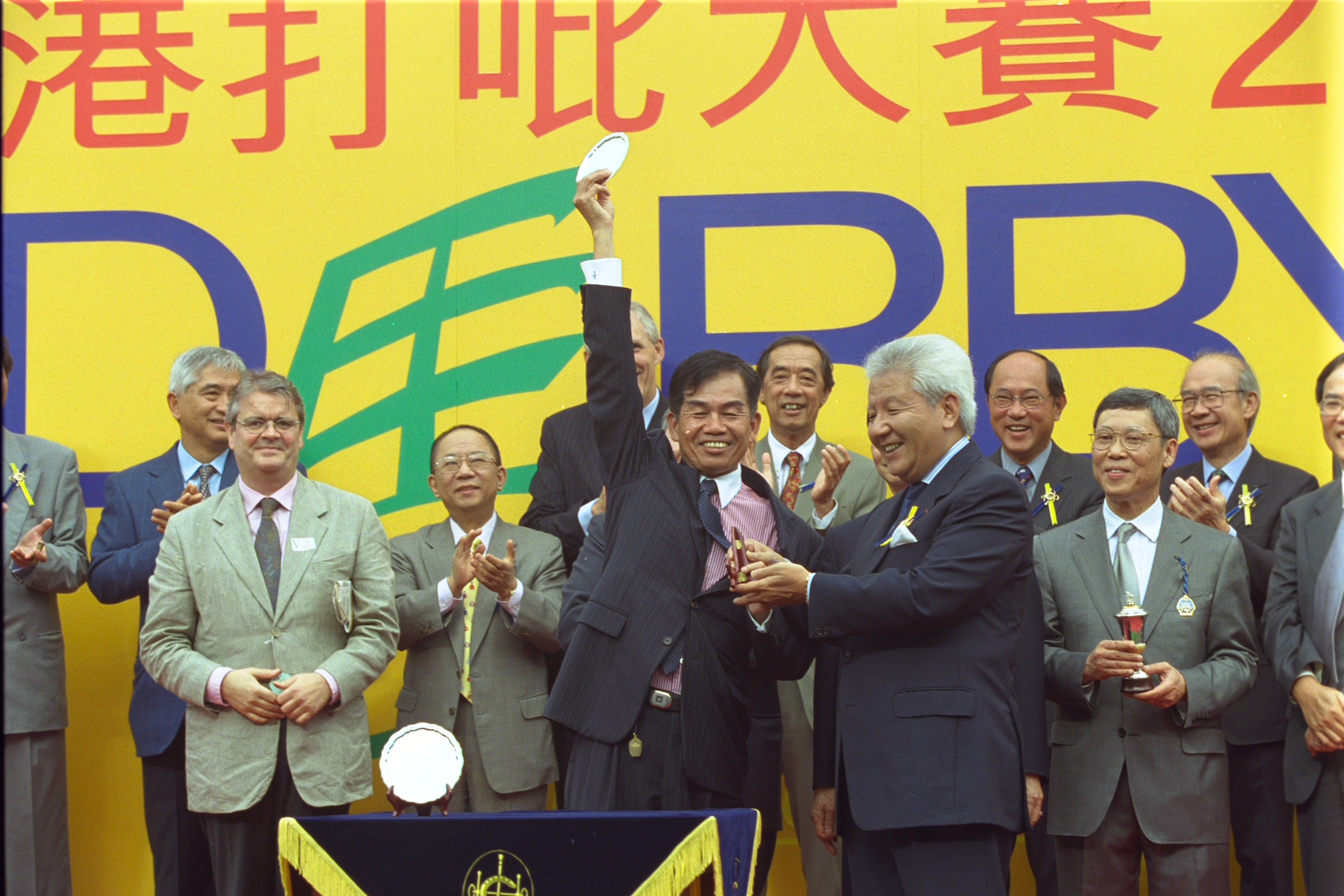
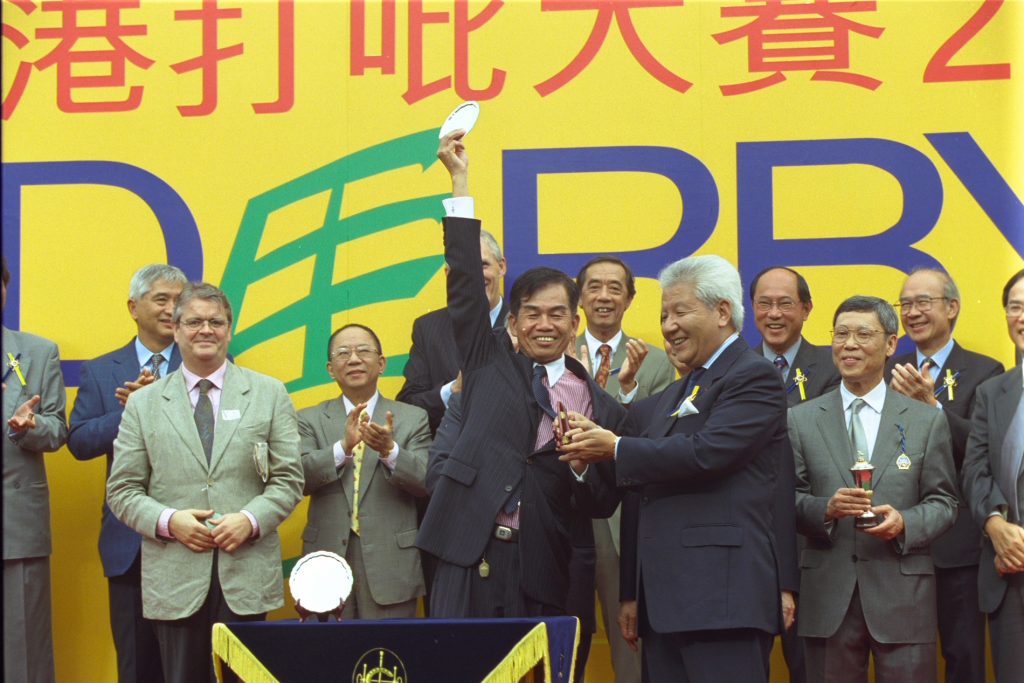
Brian Kan was one of the most successful and recognisable trainers in Hong Kong racing history. During his career, he trained 844 winners and captured the Hong Kong trainers’ championship five times. His total number of victories was once the Hong Kong record, while his final championship in 2001 was achieved amid strong competition from an increasingly international group of trainers.
Kan’s greatest achievement was his exceptional record in the Hong Kong Derby. He trained five winners of the race: Superior Gold in 1985, Yuno When in 1986, William’s Coach in 1989, Sound Print in 1992 and Industrial Pioneer in 2001. It remains one of the most distinguished Derby records compiled by any trainer in Hong Kong.
Superior Gold gave Kan his first Derby success in 1985 before Yuno When completed consecutive victories for the stable one year later. Those two wins established Kan as one of the leading trainers of the period and began a Derby sequence that would eventually span 16 years.
William’s Coach became Kan’s third Derby winner in 1989. Sound Print followed in 1992, while Industrial Pioneer supplied the fifth and final victory in 2001. Industrial Pioneer’s success came in the same year that Kan secured the last of his five trainers’ championships.
Kan also played an important role in the early development of Hong Kong’s international racing programme. On 24 January 1988, Flying Dancer won the first Hong Kong Invitation Cup over 1,800 metres at Sha Tin. Ridden by B Leisher, Flying Dancer carried 126 pounds and defeated Top Grade by one and a quarter lengths. Kan also trained the third-placed Yuno When.
The Hong Kong Invitation Cup subsequently developed into the race now known as the Hong Kong Cup. Flying Dancer’s victory therefore gave Kan an important place in the history of Hong Kong’s international races.
Kan’s stable was responsible for two consecutive Hong Kong Horse of the Year winners. Yuno When received the title for the 1985/86 season, while Flying Dancer succeeded him as Horse of the Year in 1986/87.
Another defining period in Kan’s career came through Industrialist in 2000. On 26 March, Industrialist won the Hong Kong Gold Cup over 2,000 metres at Sha Tin. Ridden by Alan Munro, he defeated Oriental Express by two and a quarter lengths, with Housemaster finishing third.
Three weeks later, Industrialist contested the Audemars Piguet QE II Cup over the same distance. He again prevailed under Munro, defeating the French-trained Jim And Tonic by a short head. Housemaster finished another short head away in third, meaning that the first three horses crossed the line separated by only two short-head margins.
The result was one of the closest finishes in the history of the race. It also demonstrated Kan’s ability to prepare a horse to defeat leading international opposition. Jim And Tonic had won the Hong Kong Cup four months earlier, but Industrialist denied him in a three-way finish that also involved one of Hong Kong’s leading middle-distance performers in Housemaster.
Industrialist’s Hong Kong Gold Cup and QE II Cup double made him one of the outstanding horses of the 1999/2000 season. The Hong Kong Jockey Club later highlighted the horse as one of the performers most closely associated with Kan’s training career.
Across his Hong Kong career, Kan accumulated 844 victories and five trainers’ championships. The Hong Kong Jockey Club described him as one of the most successful trainers in the history of Hong Kong racing and one of the city’s most iconic racing figures.
His fifth championship in 2001 held particular significance. Hong Kong racing was becoming increasingly international, with trainers from different racing jurisdictions competing at Sha Tin. Kan nevertheless remained capable of challenging for the title and completed the season as champion while also winning the Hong Kong Derby with Industrial Pioneer.
Kan’s influence extended beyond the results achieved by his own horses. The Hong Kong Jockey Club praised his commitment to developing home-grown racing talent, particularly future trainers and jockeys. Among the figures associated with his stable were Dennis Yip, Me Tsui and Jimmy Ting, all of whom subsequently became licensed trainers in Hong Kong.
Dennis Yip worked as Kan’s assistant after completing his riding career and gaining further training experience overseas. Yip received his own trainer’s licence for the 2002/03 season and later became Hong Kong champion trainer in 2012/13. The HKJC continues to identify him as a former assistant and protégé of Kan.
Kan’s willingness to teach and develop local horsemen formed an important part of his contribution to Hong Kong racing. His influence therefore continued after his own training career had ended, through the trainers and racing professionals who had learned within his stable.
His record was built around horses with very different qualities. Superior Gold, Yuno When, William’s Coach, Sound Print and Industrial Pioneer demonstrated his ability to prepare four-year-olds for the Hong Kong Derby. Flying Dancer succeeded in the city’s first major international invitation race, while Industrialist excelled against leading local and overseas opposition over 2,000 metres.
Few trainers have matched the range of Kan’s achievements. He won five championships, trained five Derby winners, handled two Hong Kong Horses of the Year and prepared the winner of the inaugural Hong Kong Invitation Cup. His 844 victories also made him Hong Kong’s record-winning trainer for a period.
Brian Kan was not merely a successful trainer. He was one of the central figures in the development of modern Hong Kong racing. His major-race record, championship victories and commitment to nurturing local talent ensured that his influence extended well beyond the horses carrying his stable’s colours.
Through Yuno When, Flying Dancer, Industrialist, Industrial Pioneer and his other Derby winners, Kan left a lasting mark on the sport. His achievements placed him among the defining trainers of his era and secured his position in Hong Kong racing history.