When a racehorse charges past the winning post at Sha Tin or Happy Valley, attention naturally focuses on whether it has won, improved its rating or produced another memorable performance. However, when the horse leaves the racetrack for the final time, an equally important question arises: what happens next?
For many racehorses, racing represents only one stage of their lives. Thoroughbreds often retire while they still have many years ahead of them, making suitable aftercare, rehabilitation and retraining essential parts of modern racing. Through its RESTART programme, The Hong Kong Jockey Club has established a structured system covering veterinary assessment, rest and rehabilitation, retraining and eventual placement in an appropriate second career.
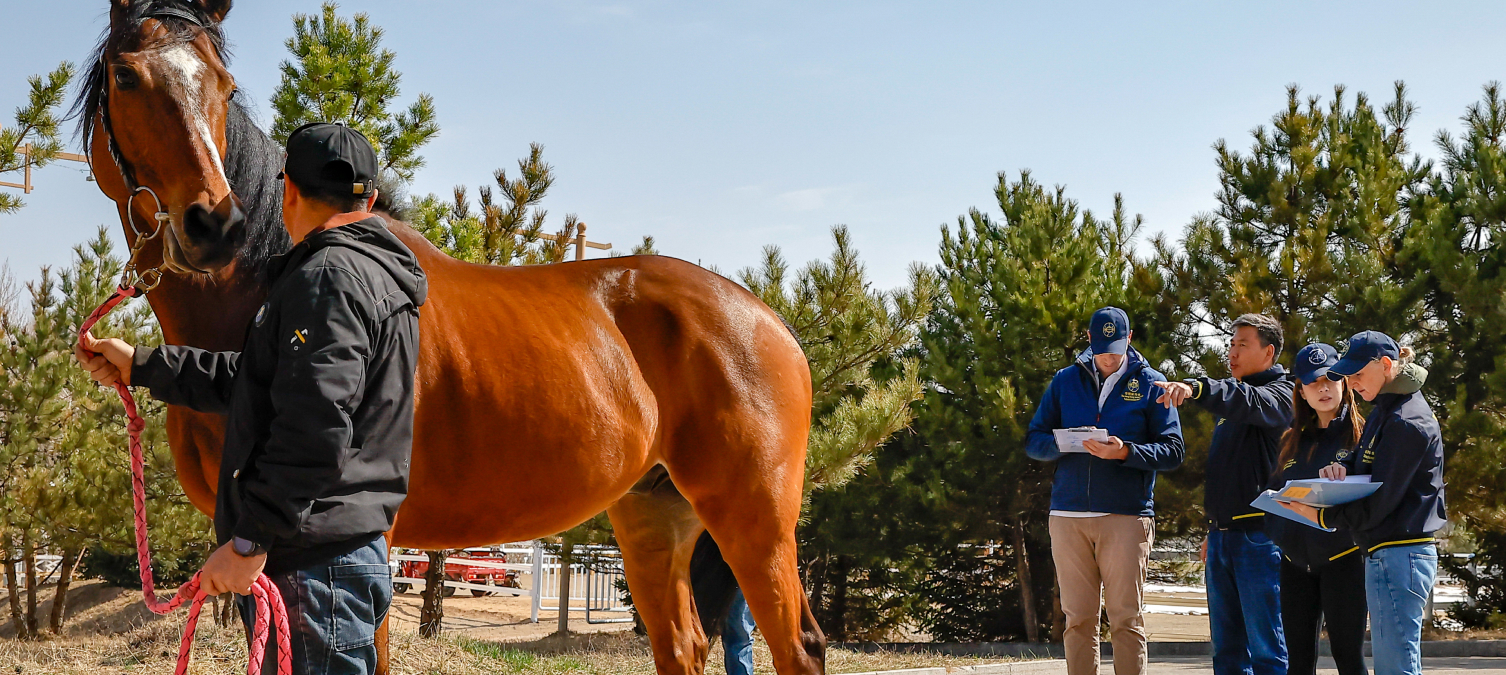
After a horse completes its racing career in Hong Kong, it does not necessarily begin equestrian training immediately. Each retired racehorse is first assessed by the Club’s veterinary teams at Sha Tin or Conghua. Its general health, clinical history and physical condition are reviewed to determine whether it is suitable for retraining.
For horses retiring because of injury, an individual rehabilitation programme may be arranged according to the nature and severity of the problem. This stage is not simply about deciding whether a horse can continue working. It also ensures that the animal is not placed under new physical demands before it has recovered sufficiently.
Following the initial assessment, many retired racehorses are transferred to the Retired Horse Unit at Conghua Racecourse for a period of rest. Moving from racing to a more conventional equestrian lifestyle involves much more than changing stables.
Racehorses are accustomed to highly structured routines, regular fast work, group exercise, starting-gate practice and the atmosphere of race meetings. After retirement, they need time to adapt to a quieter environment, a different feeding programme and a slower daily routine.
The period of rest at Conghua varies according to the needs of each horse and may last from several weeks to a number of months. Horses undergoing rehabilitation may have access to facilities and treatments including cold saltwater therapy, laser treatment, an aqua treadmill and a water walker.
According to the Club, the Retired Horse Unit can accommodate up to 102 horses. Its facilities include turnout areas, exercise rings, horse walkers, a swimming pool, a water walker, an equine hospital and treatment facilities. These resources allow horses to recover under professional supervision while gradually adjusting to life away from racing.
Once the veterinary and horse-care teams consider a horse physically and mentally ready for retraining, it may be transferred to the Retraining Unit at Beas River Equestrian Centre.
The centre can accommodate up to 80 retired racehorses and provides a range of facilities, including arenas, lunging pens, horse walkers, outdoor riding tracks, cross-country areas, trails, turnout paddocks, veterinary facilities and a farriery workshop. This varied environment allows horses to be introduced gradually to different forms of work.
Although racing and equestrian sport both involve ridden horses, the demands placed on the animals are very different. A racehorse is trained primarily to accelerate and maintain speed. Jockeys ride with short stirrups and adopt a low, forward position during races.
An equestrian horse, by contrast, must learn to respond calmly to a wider range of aids. It needs to control its pace, turn, halt, maintain balance and remain relaxed in unfamiliar surroundings. For that reason, retraining does not begin with jumping fences or performing complicated movements.
The process usually starts with basic groundwork and walking exercises. The horse is then introduced gradually to light ridden work before progressing to more complete equestrian training.
When a retired racehorse arrives at Beas River, it undergoes another veterinary assessment. Professional riders then develop a progressive training programme according to the horse’s health, temperament and learning ability.
The horse’s condition and progress are reviewed regularly. During the early stages of retraining, veterinary checks may be carried out every one or two weeks until the horse has fully adjusted to ridden work.
There is no single timetable that suits every horse. Some retired racehorses are naturally calm and adapt quickly to their new responsibilities. Others may be more sensitive to unfamiliar surroundings and require additional time to build confidence.
Throughout the retraining process, horses also undergo regular ridden assessments. The assessment panel may include veterinarians, trainers, equestrian instructors and management staff.
They consider a range of factors, including the horse’s racing history, previous injuries, temperament, trainability and natural ability. These assessments help determine the second career best suited to each individual horse.
The aim is not to turn every retired racehorse into the same type of equestrian horse. Instead, the programme recognises that every horse has different strengths and limitations. The priority is to find a role that matches its physical ability, personality and long-term welfare needs.
After completing retraining, some horses join the Club’s public riding schools and take part in lessons for riders of different standards. According to the Club, retrained racehorses can account for as much as 80 per cent of the total horse population at its riding schools.
However, horses do not begin carrying novice riders immediately after completing the first stage of retraining. They continue their education under experienced riders until their behaviour, responses and movement are considered sufficiently consistent and reliable.
Only then are they introduced gradually into suitable riding lessons.
Other retired racehorses may become livery horses at Beas River Equestrian Centre. Members applying to take on a horse must possess an appropriate level of riding ability and stable-management knowledge.
The Club provides information about each horse’s temperament inside and outside the stable, its current level of training, previous riding experience and the type of rider it is likely to suit.
Matching is therefore not simply a matter of allowing a member to choose a favourite horse. The abilities, experience and personalities of both horse and rider must be considered.
A horse may generally undergo around six months of retraining before being considered for a livery arrangement. Once a suitable partnership has been established, the rider can continue the horse’s education through leisure riding, trail riding or equestrian competition.
For many former racehorses, this stable and long-term partnership allows them to develop from racing athletes into trusted equestrian companions.
Retired racehorses with greater athletic ability, movement or competitive potential may be trained for equestrian sport. They can compete in dressage, show jumping or eventing.
The Club has stated that retired racehorses make up a large proportion of the horses competing in these three disciplines in Hong Kong. Some are ridden by members of the Club’s junior equestrian teams and gradually gain competition experience.
Outstanding horses may also be sent overseas for further training with the Club’s higher-level equestrian squads, giving them the opportunity to progress towards more advanced competition.
To encourage the participation of retired racehorses in equestrian sport, the Club also sponsors awards administered through the Equestrian Federation of Hong Kong, China.
These include awards recognising the leading retired racehorses in dressage, show jumping and eventing, as well as awards for horses beginning their equestrian competition careers.
A horse that once competed at Sha Tin may therefore continue to demonstrate its athletic ability in a completely different arena.
Not every retired racehorse becomes a riding-school horse, a livery horse or a competition horse. Some serve as school horses at the Racing Talent Training Centre, helping to educate apprentice jockeys, work riders and other racing-industry personnel.
Because these horses are already accustomed to stable routines and ridden work, they can help students develop practical skills in horse care, handling and riding in a controlled environment.
Retired racehorses also perform important duties as lead horses and ceremonial horses. The grey horses seen during morning trackwork, barrier trials and race meetings are themselves former racehorses.
They may accompany other horses during exercise or lead runners towards the starting gates on race days. Although this work may appear straightforward, it requires a calm temperament, obedience and the ability to remain settled among crowds, noise and other horses.
A horse that was once the centre of attention in a race can therefore continue contributing to the safe and orderly operation of racing in a supporting role.
Not every horse is best suited to retraining in Hong Kong. Health considerations, temperament, environmental needs or other factors may mean that a quieter or more spacious overseas setting is more appropriate.
The Club works with partners in countries including Australia, New Zealand, the United Kingdom and France to arrange individual retraining, rehoming or permanent retirement programmes.
Hong Kong’s retired racehorses can now be found in numerous countries around the world. Some continue in equestrian sport, some become leisure-riding horses and others enjoy permanent retirement on farms or at specialist facilities.
For horses whose physical condition makes further work unsuitable, permanent retirement at pasture may be the best option. However, placing a horse in a field does not remove the need for responsible care.
A suitable retirement facility should provide secure fencing, shelter, sufficient space, daily supervision, weight monitoring, hoof and dental care, parasite-control programmes and access to veterinary treatment when required.
Horses with restricted mobility or long-term medical needs may require smaller, safer turnout areas and additional individual care.
Continued monitoring is also an important part of responsible aftercare. The Club encourages owners, carers, lessees and riders of Hong Kong retired racehorses to register the horses through the RESTART programme.
When a horse changes ownership or moves to a new carer, the relevant information should also be updated. Keeping accurate records helps maintain traceability and reduces the risk of a horse losing contact with the aftercare system after being transferred several times.
A racehorse may have won multiple races during its career, or it may have retired without ever recording a victory in Hong Kong. Once its racing days are over, however, its past performance and rating should not determine whether it receives a suitable future.
What matters is that its health, temperament and abilities are properly assessed and that it is given enough time to recover, retrain and adapt to an appropriate new environment.
For racing fans, caring about a horse should not end when it disappears from the race entries. A former runner may later be seen teaching a beginner at a riding school, carrying a young equestrian competitor, leading horses during morning exercise or enjoying a peaceful retirement overseas.
None of these outcomes is more valuable than another. The priority is that every retired racehorse should be able to continue its life in a safe, healthy and respectful environment.
Leaving the racetrack does not mean that a horse has lost its purpose. Beyond the winning post, a new journey—and often an entirely new career—is waiting to begin.
Source: Hong Kong Jockey Club