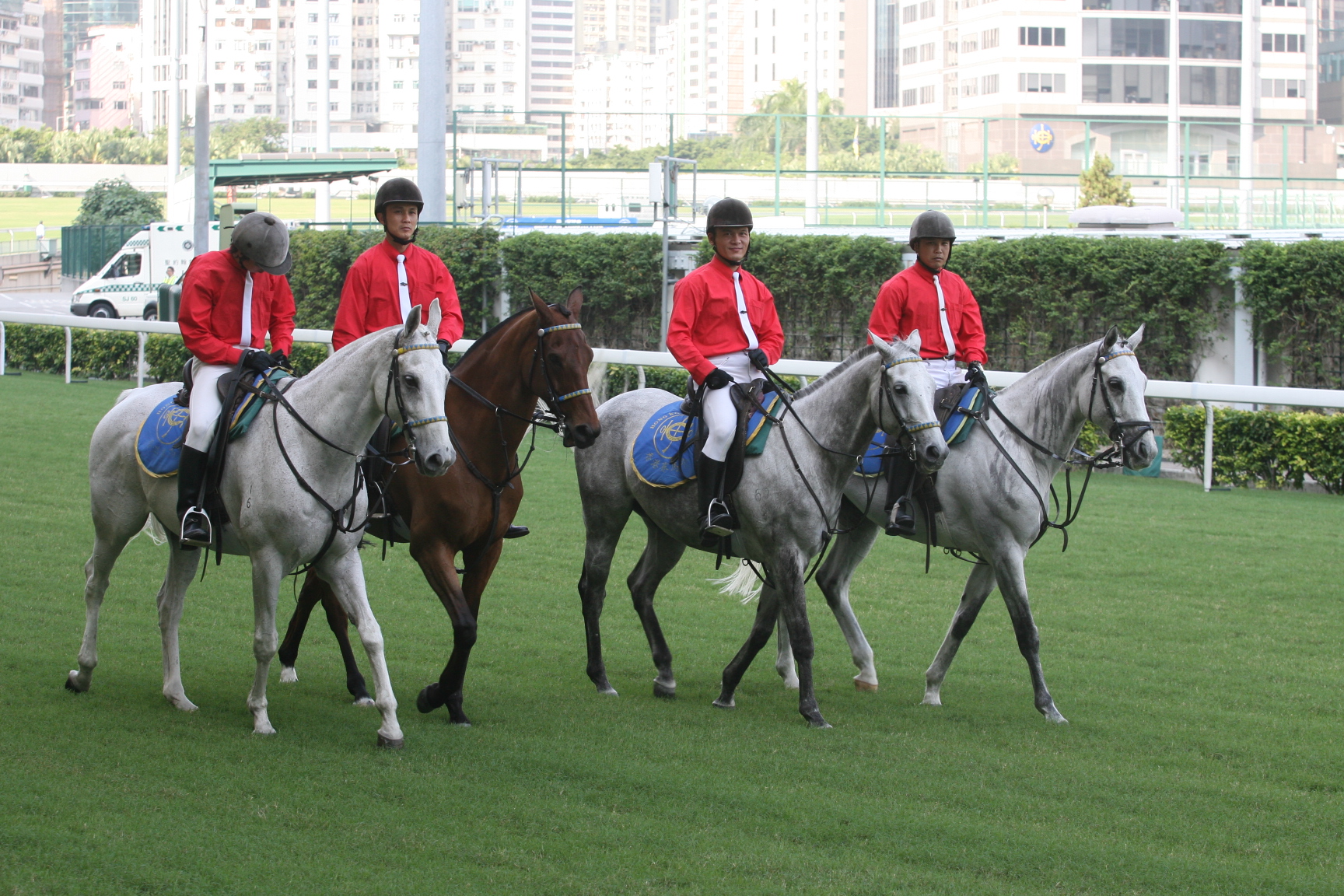
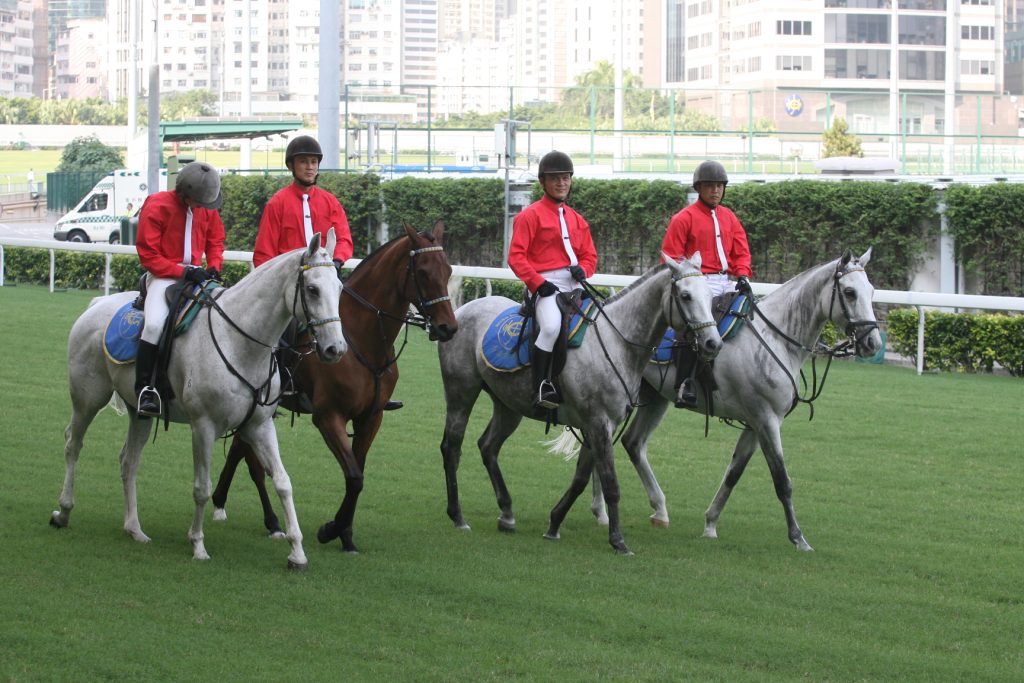
Before racing begins, most attention naturally falls on the runners, jockeys and trainers. Yet when horses make their way from the parade ring to the track, or become unsettled on the journey to the starting gates, a calm grey horse can often be seen alongside them.
This horse is not taking part in the race. Instead, it plays an important role in the smooth and safe operation of trackwork, barrier trials and race meetings. It is a ceremonial horse.
According to The Hong Kong Jockey Club, all ceremonial horses in Hong Kong are retired racehorses and are usually grey. Their duties include accompanying other horses during morning trackwork and leading runners towards the starting gates during barrier trials and race meetings.
Ceremonial horses are therefore not merely decorative animals brought out for formal occasions. They are working horses that contribute directly to the daily operation of the racecourse.
Racehorses are naturally alert and responsive. After years of training, they are highly sensitive to noise, movement, unfamiliar surroundings and the behaviour of other horses. Some runners may become nervous during trackwork or while travelling to the starting gates, particularly in the atmosphere of a race meeting.
A calm and experienced ceremonial horse can provide a reassuring presence. By walking alongside or leading a runner, it can help the horse remain settled and allow the group to proceed in a more orderly manner.
For a ceremonial horse, speed and past racing achievements are not the most important qualities. Temperament, obedience and reliability matter far more.
The horse must remain composed in an environment filled with other horses, riders, racecourse staff, machinery, crowds and sudden noises. It must respond accurately to its rider’s instructions and control its pace and direction even when another horse nearby becomes unsettled.
For this reason, not every retired racehorse is suitable for ceremonial duties.
A racehorse also does not move directly from competition into this role. Under the Club’s retired racehorse aftercare and retraining arrangements, horses first undergo veterinary assessment to determine their health, physical condition and suitability for further ridden work.
Suitable horses may spend time resting at the Retired Horse Unit at Conghua Racecourse. During this period, they are given an opportunity to recover from the physical and mental demands of racing and gradually adapt to a new daily routine, feeding programme and stable environment.
When they are considered physically and mentally ready, they may be transferred to Beas River Equestrian Centre for retraining.
During the retraining process, professional staff assess each horse’s temperament, health history, trainability and natural ability before identifying the most suitable second career.
Some retired racehorses become riding-school horses, livery horses or equestrian competition horses. Others serve as teaching horses for racing-industry trainees. Those with particularly calm and dependable temperaments may be selected for ceremonial duties.
The transition from racehorse to ceremonial horse requires a very different form of training.
During their racing careers, horses are taught primarily to move forward, accelerate and compete at speed. In their new role, they must learn to travel more slowly, remain relaxed for longer periods and work quietly alongside other horses.
They must also accept horses approaching closely from different directions and continue responding calmly to their rider. This adjustment takes time and cannot be achieved through racing experience alone.
The Club’s retraining programme therefore introduces horses gradually to their new responsibilities, allowing them to build confidence and adapt to a less competitive way of working.
Ceremonial horses may not attract the same attention as runners carrying the hopes of owners and punters. Their names may also be less familiar than those of leading racehorses.
However, when they accompany young or inexperienced horses during morning trackwork, or guide runners towards the gates on race day, they rely on qualities that are just as valuable as speed: experience, patience and composure.
The competitive instinct that once drove them down the home straight is reshaped through retraining into a calm presence that helps other horses perform their duties safely.
Becoming a ceremonial horse should not be regarded as a former racehorse being reduced from a leading role to a supporting one. It is another meaningful career in which the horse continues to contribute to Hong Kong racing.
These horses no longer race for victory, but their steadiness and experience help a new generation of runners complete their work and reach the starting gates safely.
The next time a grey ceremonial horse appears during morning trackwork, a barrier trial or a race meeting, it is worth paying closer attention.
That quiet figure may once have competed on the same Hong Kong racecourses. Although its racing career has ended, it remains part of the sport in a new capacity—maintaining order, supporting other horses and serving as one of the racecourse’s true unsung heroes.
Source: Hong Kong Jockey Club